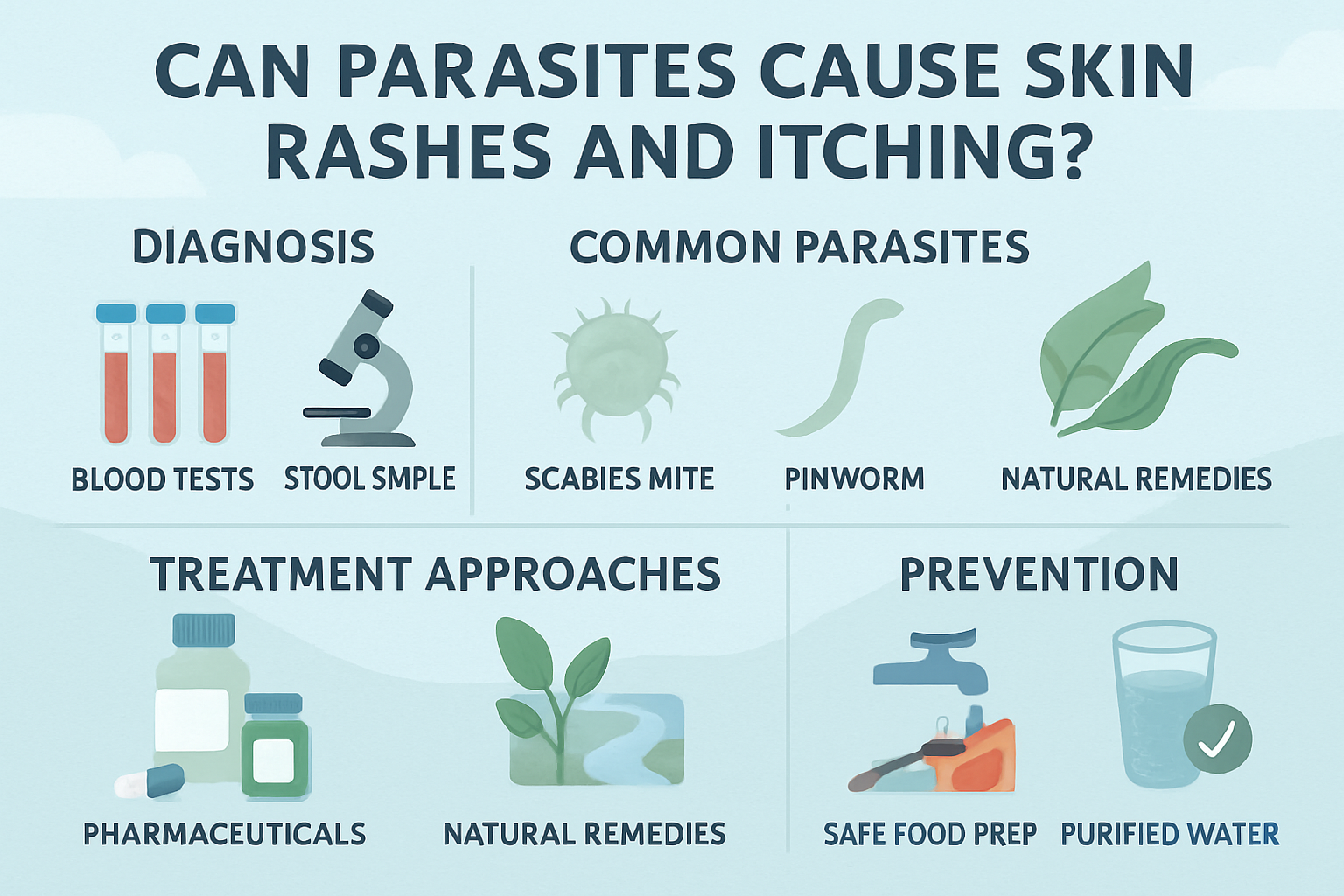
Can Parasites Cause Skin Rashes and Itching? Unraveling the Mystery in 2025
Ever woken up with an inexplicable itch or noticed a strange rash appearing on your skin, leaving you to wonder about the cause? It’s a common and often frustrating experience. While many things can trigger skin irritation, from allergies to environmental factors, a question that often surfaces is: can parasites cause skin rashes and itching? The answer, for many, is a resounding yes! Parasites, those unwelcome guests that take up residence in or on our bodies, can indeed be a significant culprit behind a range of skin issues, from persistent itching to visible rashes. In 2025, understanding this connection is more important than ever for maintaining your health and comfort.
This comprehensive guide will dive deep into the fascinating (and sometimes unsettling) world of parasites and their dermatological impact. We’ll explore how these tiny invaders can manifest their presence through your skin, what specific parasites are often to blame, and crucially, what you can do about it. Get ready to uncover the truth behind those mysterious skin complaints!
Key Takeaways
- Parasites are a real cause of skin issues: Many types of parasites, both internal and external, can lead to a variety of skin rashes, lesions, and intense itching.
- Symptoms vary widely: The specific skin symptoms depend heavily on the type of parasite, its lifecycle, and how your body reacts to its presence.
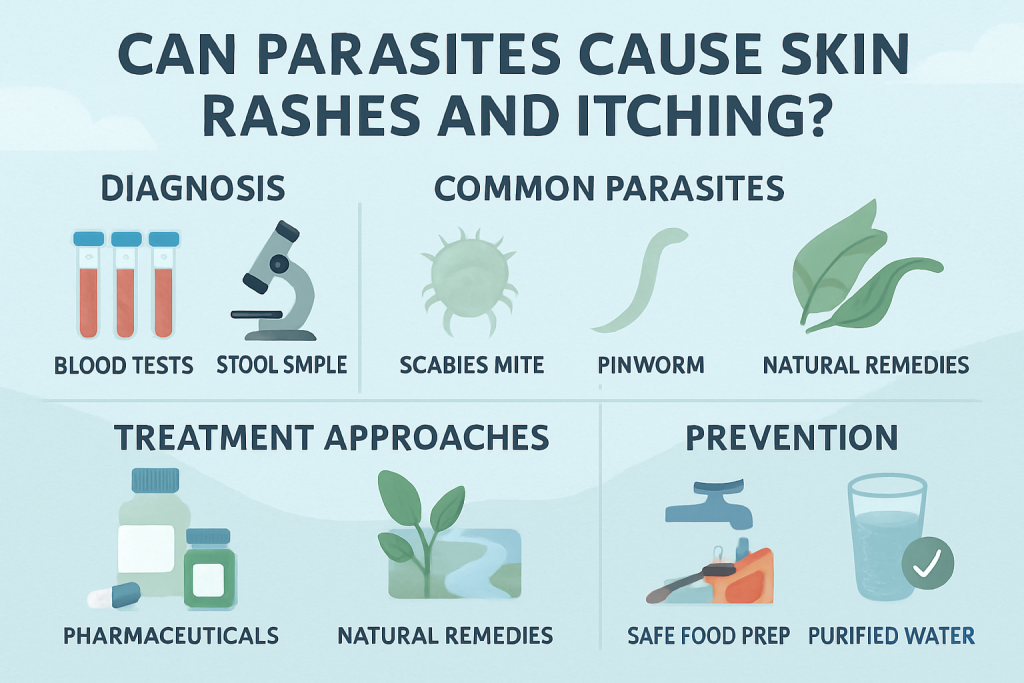
- Diagnosis can be challenging: Identifying a parasitic skin condition often requires careful medical evaluation, including specific tests like skin scrapings, blood tests, or stool analyses.
- Treatment is essential: Effective treatment involves targeting and eliminating the specific parasite, which can bring significant relief and prevent further complications.
- Prevention is key: Practicing good hygiene, safe food handling, and avoiding contaminated environments are crucial steps in preventing parasitic infections and their associated skin problems.
The Unseen Invaders: How Parasites Affect Your Skin
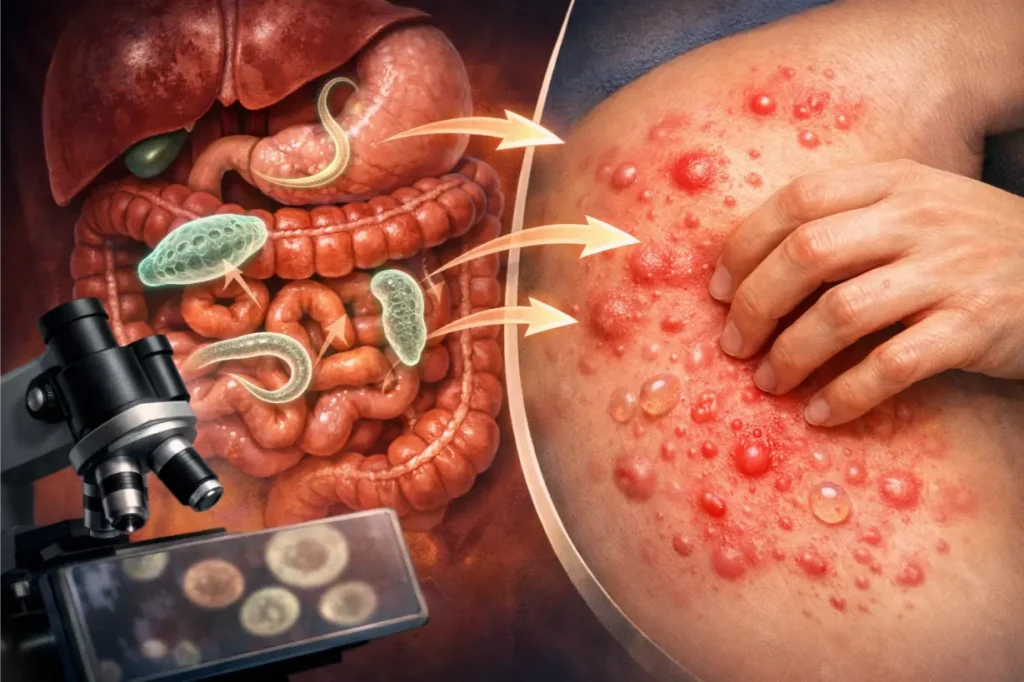
It might sound like something out of a science fiction movie, but parasites are a very real and common aspect of life on Earth, and humans are not immune to their presence. These organisms live off a host, deriving nourishment and shelter, often at the host’s expense. When it comes to your skin, parasites can affect it in several ways. Some parasites live directly on the skin (ectoparasites), while others live inside the body (endoparasites) but cause skin symptoms as a reaction to their presence or migration.
The body’s immune system often kicks into high gear when it detects these invaders. This immune response is frequently what causes the visible skin rashes and the uncomfortable sensation of itching. Imagine your body sending out an alarm signal – that alarm often manifests as inflammation, redness, and irritation on the skin’s surface. So, when you ask, “can parasites cause skin rashes and itching?”, the answer isn’t just a simple yes; it’s a complex interplay of parasitic activity and your body’s defense mechanisms.
Ectoparasites: When the Enemy is on the Surface
Ectoparasites are probably what most people think of first when considering parasites and skin issues. These are organisms that live on the exterior of the host, feeding on blood, skin cells, or other bodily fluids. Their presence alone can be intensely irritating, and their bites or burrowing can lead to distinct skin reactions.
Let’s look at some common culprits:
- Scabies Mites (Sarcoptes scabiei): These tiny mites are infamous for causing intense itching, especially at night. They burrow into the upper layer of the skin to lay eggs, creating small, thread-like burrows that can appear as fine, wavy lines. The itching is primarily an allergic reaction to the mites, their eggs, and their waste products. Scabies often presents as a widespread, intensely itchy rash with small red bumps or blisters, commonly found between fingers, on wrists, elbows, armpits, and around the waistline.
- Lice (Pediculosis): Head lice, body lice, and pubic lice (crabs) are all ectoparasites that feed on human blood. Their bites cause itching, and persistent scratching can lead to skin irritation, sores, and even secondary bacterial infections. Lice themselves are small, wingless insects, and their eggs (nits) are often visible attached to hair shafts. The itching is due to an allergic reaction to their saliva.
- Fleas: While often associated with pets, fleas can and do bite humans. Flea bites typically appear as small, red, itchy bumps, often grouped in clusters or lines, especially around ankles and legs. The itching can be quite severe, and some people develop an allergic reaction called “flea allergy dermatitis,” leading to more widespread and intense itching and rash.
- Bed Bugs (Cimex lectularius): These nocturnal pests feed on human blood, typically while a person is sleeping. Their bites are often arranged in a linear pattern (the “breakfast, lunch, and dinner” sign) and can be intensely itchy, developing into red, raised welts or blisters. While not strictly parasites in the same way as mites or lice (they don’t live on you), their bites certainly cause skin rashes and itching.
- Ticks: Ticks attach to the skin to feed on blood. While the bite itself might be painless, the tick’s presence can cause local irritation, redness, and itching. More importantly, ticks can transmit serious diseases like Lyme disease, which often presents with a characteristic “bull’s-eye” rash (erythema migrans).
Endoparasites: Internal Issues, External Manifestations
It’s not just parasites on the surface that can make your skin unhappy. Many parasites that live inside the body can also cause a surprising array of skin symptoms. These symptoms often arise as a result of:
- Allergic reactions: The body’s immune system reacting to the parasite or its waste products.
- Migration of larvae: Young parasitic forms (larvae) traveling through skin tissue.
- Nutrient deficiencies: Parasites competing for nutrients, leading to skin and hair problems.
- Inflammation and systemic effects: The parasite’s presence causing widespread inflammation or affecting organ function, which can show up on the skin.
So, when considering can parasites cause skin rashes and itching, remember that internal invaders can be just as significant as external ones.
Here are some examples of endoparasites and their skin links:
- Hookworms: These intestinal worms can cause a condition called “cutaneous larva migrans” (CLM) or “creeping eruption.” This occurs when hookworm larvae, typically from animal feces, penetrate human skin. They then migrate under the skin, creating intensely itchy, raised, serpiginous (snake-like) red tracks that move a few millimeters per day. This is a very clear example of an internal parasite causing a direct skin rash and itching.
- Pinworms (Enterobius vermicularis): While primarily living in the intestines, female pinworms migrate to the anal area at night to lay eggs. This migration often causes intense perianal itching, especially at night. Repeated scratching can lead to skin irritation, redness, and secondary infections around the anus.
- Strongyloides stercoralis: This roundworm can cause a similar migratory rash to hookworms, known as “larva currens” (running larva). The rash is typically faster-moving, more linear, and very itchy, often appearing around the buttocks and perineum. In chronic infections, a generalized itchy rash (urticaria) can occur on other parts of the body.
- Tapeworms (Cestodes): While less common, certain tapeworm infections, such as cysticercosis (caused by the larval stage of the pork tapeworm, Taenia solium), can lead to subcutaneous nodules (lumps under the skin) if the larvae encyst in the skin or muscle tissue. These nodules might be visible or palpable, though they don’t typically cause itching unless they become inflamed.
- Filarial Worms (e.g., Onchocerciasis, Loiasis): These tropical parasites can cause severe skin manifestations. Onchocerciasis, or “river blindness,” can lead to intense itching, skin discoloration, thickening of the skin (“lizard skin”), and nodules under the skin. Loiasis, or “African eye worm,” is known for causing “Calabar swellings,” which are migratory subcutaneous swellings that can be itchy and painful.
- Toxoplasmosis (Toxoplasma gondii): While often asymptomatic, severe cases of toxoplasmosis, particularly in immunocompromised individuals or congenital infections, can present with a non-specific maculopapular rash (flat and raised red bumps).
- Liver Flukes (e.g., Fasciola hepatica, Clonorchis sinensis): In rare cases, especially during the migratory phase of the larvae or in severe infections, allergic skin reactions such as urticaria (hives) or angioedema (swelling beneath the skin) can occur.
Understanding these connections highlights why it’s crucial to consider parasitic infections when diagnosing persistent or unusual skin conditions. For more information on identifying and addressing internal parasites, you might find resources on natural parasite cleanse beneficial.
The Role of the Immune System in Skin Reactions
The body’s immune system is a double-edged sword when it comes to parasitic infections. On one hand, it’s designed to fight off invaders. On the other, its defense mechanisms can sometimes be overzealous, leading to symptoms like rashes and itching. When a parasite enters the body, the immune system launches an attack. This involves various cells and chemicals, some of which trigger inflammation.
- Histamine Release: A common culprit behind itching is histamine. When immune cells detect a threat, they release histamine, which increases blood flow and makes small blood vessels leaky, causing redness, swelling, and itchiness. This is why antihistamines are often used to relieve itching.
- Eosinophils: These are a type of white blood cell specifically involved in fighting parasitic infections and allergic reactions. High levels of eosinophils are often a sign of a parasitic infection and can contribute to inflammatory skin responses.
- Cytokines: These are signaling molecules that orchestrate the immune response. Certain cytokines can contribute to skin inflammation and changes.
The intensity and type of skin reaction can vary greatly depending on the individual’s immune response, the type of parasite, the duration of the infection, and the parasite’s location within the body. This complexity underscores why self-diagnosis can be tricky and why professional medical advice is always recommended.
Diagnosing and Treating Parasitic Skin Conditions
If you suspect can parasites cause skin rashes and itching in your case, seeking a diagnosis from a healthcare professional is the crucial next step. Accurately identifying the specific parasite is essential for effective treatment.
The Diagnostic Process
Diagnosing parasitic skin conditions often involves a multi-pronged approach:
- Medical History and Physical Examination: Your doctor will ask about your travel history, exposure to animals, living conditions, and the duration and characteristics of your symptoms. A thorough examination of your skin, including the type of rash, its distribution, and any visible signs of parasites or burrows, will be conducted.
- Skin Scrappings or Biopsy: For ectoparasites like scabies mites, a doctor might gently scrape a small amount of skin from an affected area and examine it under a microscope to look for mites, eggs, or fecal matter. For deeper or more unusual lesions, a skin biopsy (removing a small tissue sample for lab analysis) might be necessary.
- Blood Tests: Blood tests can be helpful for internal parasitic infections. They might reveal elevated eosinophil counts, which are indicative of parasitic activity. Serological tests can detect antibodies that your body produces in response to specific parasites.
- Stool Samples: For intestinal parasites, stool samples are often analyzed for the presence of parasite eggs, larvae, or adult worms. While skin symptoms might be the primary complaint, the root cause could be an internal parasite.
- Imaging Studies: In some rare cases, particularly with certain deep-seated parasites or migratory larvae, imaging techniques like ultrasound, CT scans, or MRIs might be used to locate the parasites within the body.
Remember, patience and persistence might be needed during the diagnostic phase, as some parasitic infections can be challenging to pinpoint.
Treatment Approaches
Once a diagnosis is made, treatment typically focuses on eliminating the parasite and alleviating symptoms. The specific treatment will depend entirely on the identified parasite:
- Topical Medications: For ectoparasites like scabies and lice, medicated creams, lotions, or shampoos containing insecticides (like permethrin or malathion) or other antiparasitic agents are commonly prescribed. These are applied directly to the skin or hair.
- Oral Medications: Many internal parasitic infections, and even some ectoparasitic ones (like severe scabies), are treated with oral antiparasitic drugs. Examples include ivermectin, albendazole, mebendazole, and praziquantel. The choice of medication depends on the specific parasite.
- Symptomatic Relief: Alongside antiparasitic treatment, managing the itching and discomfort is crucial. This can involve:
- Antihistamines: To reduce itching.
- Corticosteroid Creams: To reduce inflammation and rash severity.
- Moisturizers: To soothe dry, irritated skin.
- Antibiotics: If secondary bacterial infections have developed from scratching.
- Environmental Treatment: For parasites like bed bugs, fleas, or lice, it’s also essential to treat the environment to prevent re-infestation. This might involve thorough cleaning, vacuuming, washing bedding and clothing in hot water, and sometimes professional pest control.
For those interested in exploring complementary approaches, there are resources available on natural parasite cleanses that outline holistic strategies, often involving specific diets and herbal remedies. However, it’s vital to consult with a healthcare professional before starting any alternative treatments, especially when dealing with confirmed parasitic infections. You can also learn about what to expect during a parasite cleanse to be prepared.
Prevention: Keeping Parasites at Bay
Preventing parasitic infections is always better than treating them. Here are some key preventive measures that can reduce your risk of encountering parasites that cause skin rashes and itching:
- Practice Excellent Hygiene:
- Wash hands thoroughly with soap and water, especially after using the restroom, before eating, and after handling soil or animals.
- Regular bathing and showering.
- Keep fingernails short and clean to prevent parasitic eggs (like pinworm eggs) from lingering under them.
- Safe Food and Water Practices:
- Cook meat thoroughly to kill any parasites.
- Wash fruits and vegetables rigorously, especially if consumed raw.
- Avoid consuming untreated water from natural sources when traveling.
- Be cautious about street food in areas with questionable hygiene.
- Protect Yourself from Insect Bites:
- Use insect repellents containing DEET or picaridin when outdoors, especially in endemic areas.
- Wear long sleeves and pants in areas known for ticks or mosquitoes.
- Use bed nets when sleeping in areas where mosquitoes or bed bugs are prevalent.
- Check yourself, children, and pets for ticks after spending time outdoors.
- Animal Control:
- Regularly deworm and treat pets for fleas and ticks.
- Avoid direct contact with animal feces, especially from stray animals.
- Wear gloves when gardening or handling soil that might be contaminated with animal waste.
- Travel Smart:
- Research common parasitic infections in your destination before traveling.
- Take precautions with food and water.
- Consider prophylactic medications if recommended by your doctor for specific regions.
- Maintain a Strong Immune System: A healthy immune system can better fend off infections. Eating a balanced diet, getting enough sleep, and managing stress are all important. For dietary support related to gut health, which is crucial for overall immunity, you might explore parasite cleanse diet recipes.
By adopting these practices, you can significantly reduce your risk of parasitic infections and the uncomfortable skin issues they can cause. And if you are embarking on a cleanse, understanding parasite cleanse side effects can help you navigate the process safely.
Common Misconceptions About Parasites and Skin
There are many myths and misunderstandings surrounding parasites and their impact on human health, especially concerning skin. Let’s clear up a few:
- Myth: Only people in developing countries get parasites.
- Fact: Parasitic infections occur worldwide. While certain parasites are more prevalent in tropical or subtropical regions with poor sanitation, many others, like pinworms, scabies, and giardia, are common in developed countries too. Travelers can also bring parasites back from their trips.
- Myth: You’d always know if you had parasites.
- Fact: Many parasitic infections can be asymptomatic or cause very mild, non-specific symptoms for extended periods. Skin rashes might be the only noticeable symptom, or they might be accompanied by general fatigue, digestive issues, or weight changes that are easily attributed to other causes. This is why the question, “can parasites cause skin rashes and itching?” is so important.
- Myth: Skin rashes from parasites always look the same.
- Fact: As discussed, parasitic skin rashes can manifest in a wide variety of ways: intensely itchy bumps, burrows, migrating tracks, nodules, hives, or general inflammation. The appearance depends on the parasite, its lifecycle stage, and the individual’s immune response.
- Myth: Parasites only affect your gut.
- Fact: While many common parasites reside in the gastrointestinal tract, parasites can infect virtually any organ system in the body, including the liver, lungs, brain, muscles, and of course, the skin. Their systemic presence can lead to a broad range of symptoms, including dermatological ones.
- Myth: You can easily get rid of parasites with a quick home remedy.
- Fact: While some natural remedies can be supportive, effective treatment for confirmed parasitic infections often requires specific, prescription antiparasitic medications. Self-treating without a proper diagnosis can lead to delayed treatment, worsening of the condition, or resistance to medications. Always consult a healthcare professional. For those interested in natural approaches, learning about top 5 herbs for a natural parasite cleanse can be informative, but should be discussed with a doctor.
When to See a Doctor About Your Skin
Given that many conditions can cause skin rashes and itching, it’s important to know when to seek professional medical advice. If you experience any of the following, it’s time to consult a doctor, especially if you’re wondering, can parasites cause skin rashes and itching:
- Persistent Itching: If itching is severe, widespread, or lasts for more than a few days without a clear cause (like a known insect bite or allergy).
- Unexplained Rashes: Rashes that appear suddenly, spread rapidly, are painful, blistering, or don’t improve with over-the-counter remedies.
- Migratory Rashes: If you notice a rash that appears to be moving or forming tracks under the skin.
- Fever or Systemic Symptoms: If your skin symptoms are accompanied by fever, chills, fatigue, swollen lymph nodes, unexplained weight loss, or gastrointestinal issues.
- Recent Travel: If you’ve recently traveled to a tropical or subtropical region.
- Exposure Concerns: If you know you’ve been exposed to someone with a parasitic infection (like scabies or lice) or have had contact with potentially contaminated water or soil.
- Symptoms in Immunocompromised Individuals: People with weakened immune systems are more vulnerable to severe parasitic infections and should seek medical attention promptly for any unusual skin changes.
Early diagnosis and treatment are crucial for preventing complications and ensuring a faster recovery. Don’t delay in seeking professional advice if you have concerns.
Conclusion
The question, can parasites cause skin rashes and itching, is not only valid but also highlights an often-overlooked aspect of dermatological health. From the irritating bites of ectoparasites like scabies mites and lice to the fascinating migratory tracks of hookworm larvae, and the systemic reactions to internal invaders, parasites can manifest their unwelcome presence through a myriad of skin symptoms. The discomfort and potential health risks associated with these conditions underscore the importance of awareness, accurate diagnosis, and appropriate treatment in 2025.
If you are experiencing persistent, unexplained skin rashes or itching, especially if accompanied by other symptoms like fatigue, digestive issues, or recent travel, it’s crucial not to dismiss it. A timely consultation with a healthcare professional can lead to a correct diagnosis and an effective treatment plan, bringing relief and preventing further complications. Remember, your skin is a window to your internal health, and sometimes, those mysterious itches and rashes are telling you more than you think. Stay informed, stay vigilant, and prioritize your health!
Actionable Next Steps:
- Consult a Doctor: If you have persistent or unusual skin symptoms, schedule an appointment with your primary care physician or a dermatologist. Be prepared to discuss your symptoms, travel history, and any potential exposures.
- Avoid Self-Diagnosis and Treatment: Resist the urge to self-diagnose or try unverified home remedies, as this can delay effective treatment and potentially worsen your condition.
- Practice Prevention: Implement the hygiene and safety practices discussed in this article to minimize your risk of future parasitic infections.
- Stay Informed: Continue to educate yourself about parasitic infections and their impact on health. Reputable sources like the CDC or WHO, and well-researched health sites like parasitecleanse.org, can be valuable resources.